How to Build a Content Taxonomy Your Team Will Actually Use
Start with what each team needs to find, not what feels complete on paper.

A content taxonomy your team will actually use starts with a short, governed set of fields. Building that structure means making the same content retrievable by colleagues and by AI answer engines. The work is shared, too, because useful labels, clear ownership, and accurate reviews help both readers understand what a piece says and when to trust it.
Why content taxonomies fail before anyone searches for anything
The same campaign appears under three different labels in a dashboard. A content audit takes a week because nobody tagged the work consistently. Analytics wants rigid fields, legal wants compliance checkboxes, and contributors want to publish without another form standing in the way. When one team designs the structure without the others, those competing needs remain unmet, resulting later in blank fields and improvised tags.
A second failure can look deceptively like success. Contributors complete every required field, but use defaults or meaningless placeholders to get through the publishing process. The dashboard shows completion without useful classification. This is checklist fatigue, and adding more mandatory fields only gives it more room to spread. Both failures start with a taxonomy imposed on people who cannot see how the extra work helps them.
Co-design the structure with the teams that must use it, rather than treating adoption as a training problem after the design is finished. What does each team need to find, distinguish, or approve? Those needs help contributors see why the fields are there. Without that shared understanding of why the fields are there, even a well-built taxonomy can remain unused in daily work.
What a content taxonomy actually is and what it must do now
A content taxonomy is a classification system made from a short, fixed set of labeled fields with controlled values. The fields describe content in repeatable ways so that people can find it through search, navigation, and filters. Shared meanings do the work here. A topic label is useful only if the person applying it and the person searching for it understand roughly the same thing.
The job now extends beyond human navigation. AI answer engines such as ChatGPT, Perplexity, Claude, and Gemini retrieve and cite passages or chunks as well as whole pages, so topic, entity, content type, and freshness also help make content intelligible to machines. That calls for fields that make the content clear to both people and machines.
A taxonomy built only around CMS navigation may say too little about what a piece means, while one built only for machines may be too abstract for contributors to apply consistently. The useful middle ground is a structure people can understand and maintain. Its labels must describe what is in the content, beyond how a department sorts its folders.
How many fields to build, and why the answer depends on team size not aspiration
The number of fields should follow the team's ability to govern them. A large wish list is not evidence of that ability. Adding fields beyond nine requires formal governance committees and dedicated taxonomy owners. Without both, staying at a seven-field standard is the advised limit. Maintenance capacity constrains how many useful dimensions a team can measure.
A starter set of six fields covers most retrieval questions. Those fields are content type, topic or pillar, audience, goal, format, and a “last reviewed” date. Together, they describe what the piece is, what it addresses, whom it serves, and how it is presented. The review date deserves a place from the beginning. It records attention to the content's accuracy, which will also become important when assessing freshness for AI retrieval.
Region, product line, and funnel stage may all be useful, but a plausible use is weaker evidence than an actual retrieval failure. The rule is to add a field only when a real content object cannot be found without it. That gives the team a concrete test for requests rather than a debate about whose reporting needs sound most important.
Team size affects how much oversight is realistic, but headcount alone does not settle the question. A field still needs someone to define it and keep its values useful. More detail without enforcement is noise.
The governance structure that keeps the taxonomy from decaying
One person needs unambiguous authority to approve new values. That authority should operate through a controlled vocabulary, so contributors choose from agreed terms rather than inventing near-equivalents as they publish. Teams contribute their requirements, while a named owner resolves changes to the shared structure.
A hybrid model balances that control with local needs. A small core schema that everyone must use stays under central control, while a few local extensions let regional or product teams work without asking for approval each time. The boundary must be clear. Full centralization slows publishing, full federation produces hidden duplicates and noisy dashboards, and a hybrid arrangement fails if its core is too heavy or too vague.
Scheduled quarterly reviews give the owner a way to prune the vocabulary. They retire unused values and allow exactly one new value when a real content object genuinely fails to fit. Otherwise, the taxonomy becomes an archaeological record of initiatives that no longer shape the work.
OpenSesame established authoritative definitions for thousands of skills after identifying gaps in how concepts were understood and applied. Its approach was human-driven and AI-assisted, with expert review. Generating labels is different from deciding what they mean, and authoritative definitions still need people who can resolve ambiguity.
How the same taxonomy fields become AI-retrieval signals
The internal vocabulary also has an external consequence. The fields that help colleagues tell pieces apart can also help AI answer engines see their subjects, how they relate to one another, their source types, and their freshness. But the machine needs access to those meanings. A useful label inside a CMS is a starting point for clear signals in the published content.
Primary entity is a frequent omission from that structure. A brand needs a consistent entity name across its site, LinkedIn profile, industry directories, and, where applicable, Wikipedia or Wikidata so that a model can reliably identify it. Recognition comes before reliable attribution to that entity.
The “last reviewed” field has a different role. Recently updated pages receive meaningfully more AI citations than stale pages, making review status relevant beyond housekeeping. That is not a reason to treat a changed date as a content update. The useful connection is between the field and the actual review work it records, so freshness reflects attention to the evidence.
Topic or pillar fields connect individual pages into a coherent body of evidence on a subject. Content-type tags add another distinction because AI engines weight source types differently, including owned articles, earned coverage, original research, and repurposed posts. Those distinctions help a team understand the citation profile it is building. Porsche saw a 19-point rise in AI visibility after it changed its semantic messaging using a vendor's brand measurement metrics. The case shows a change that could be measured after work on semantic messaging, but it does not prove that a tag alone makes content more visible.
Building the taxonomy so AI can extract clean facts, not just find the page
Retrieval is only the first test a page faces. Once found, it must offer clean, verifiable statements that an AI engine can use without resolving contradictions on its own. A topically relevant page can still be bypassed. When evidence is weak or internally inconsistent, an AI system may abstain to avoid risking a wrong answer.
That shifts attention from labels to the content underneath them. Does the passage make an identifiable claim, and does the rest of the page consistently support it? Taxonomy can make the right content easier to locate, but the content still has to supply something worth extracting.
Structured schema markup, including Article, FAQPage, and HowTo, makes topic and entity signals machine-readable at page level. It provides a bridge between the CMS classification and the model's recognition of the published object. Content structure provides another bridge. “Best-of” and ranked-list formats offer discrete claims that are easier to extract than an uninterrupted narrative, so the taxonomy should distinguish them as deliberate editorial categories.
Spotify's audiobook taxonomy illustrates the limits of labels at scale. Its handcrafted taxonomy reached a point where an AI-assisted redesign still required human oversight to resolve ambiguity. Sophisticated classification did not eliminate the need for judgment. The same principle applies within a tagged article, where clear, unambiguous content objects must support the label assigned to the whole piece.
The AI content pipeline that keeps the taxonomy populated accurately at scale
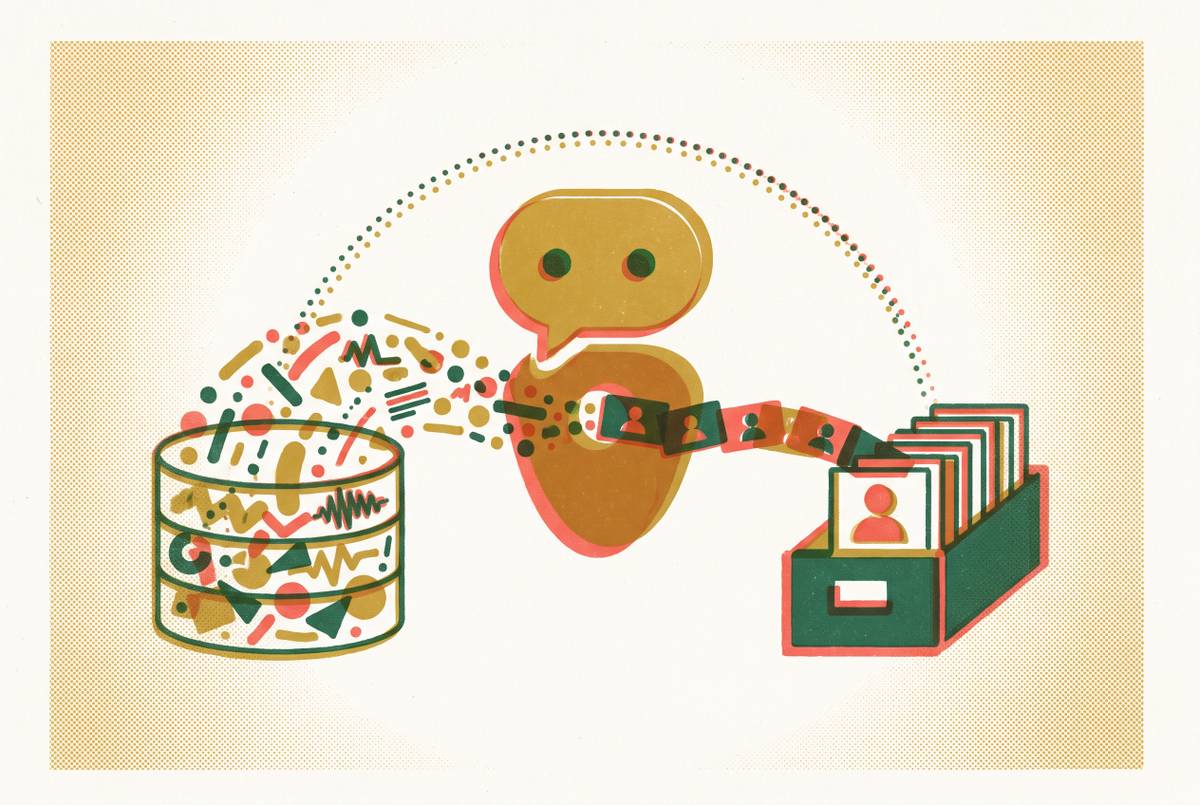
A publishing pipeline must get the metadata right as well as finish the prose. AI can help at draft time by proposing topic-cluster, content-type, audience, and entity tags from the draft itself. An editor then checks the classification, especially where several labels seem plausible. Forcing pieces into categories when their fit is unclear weakens the retrieval system over time.
The review must also cover the claims beneath the tags. Four gates belong before publication, beginning with a factual gate where every claim is verified, labeled, or removed. An editorial gate checks voice, structure, and audience fit. These are different judgments, because a piece can be factually sound yet poorly suited to the reader it claims to serve.
A risk and compliance gate addresses legal and policy requirements and is mandatory for high-stakes content. The publication gate then confirms that the final artifact includes metadata reviewed for that version, replacing any values retained from an earlier draft. This last check closes a specific gap. Reviewing a classification is not enough if the published version does not contain it.
The sequence gives AI a bounded role in the workflow. It proposes classifications at the point where content is being created, while human reviewers settle uncertain meanings and approve publication. That arrangement also connects production back to governance. A piece that genuinely fails to fit becomes evidence for the scheduled vocabulary review, rather than an invitation to create a new tag under deadline pressure.
Measuring whether the taxonomy is working for humans and for AI engines
Field completion rates and search-to-find ratios show whether people can use the structure to work with the content. Filled fields alone do not show that it works, because placeholders can get a form through without saying anything useful. Together, these signals help distinguish a taxonomy that is being filled in from one that is actually useful.
A quarterly fragmentation index catches decay in the vocabulary. Rarely used values warrant attention because they may be typos, tests, or ungoverned additions. Each can conceal content from someone using the agreed term. This measurement gives scheduled reviews evidence for pruning, instead of asking the owner to judge the vocabulary from memory.
Google Search Console and rank trackers do not report whether the answer engines name and cite a brand in response to relevant prompts. Dedicated AI-visibility monitoring tracks mention frequency and source attribution across those engines. A mention and a citation answer different questions, so both belong in the assessment.
Connecting the two measurement layers makes structural changes testable. Does adding a “last reviewed” field and acting on it increase citation frequency? Does entity-tagging previously ungrounded content change how often the site is cited? These questions turn maintenance into an instrumented practice rather than a one-time cleanup, with each change tied to an outcome the team can examine.
The value grows as teams get fields right, pass review gates, and keep entities consistent. Each makes a claim easier for an AI engine to retrieve and cite, without guaranteeing selection. Maintenance is therefore part of the asset's usefulness. The site has always been the asset. Now it must also be legible to a machine to do its job.