Why Ecommerce Conversion Fixes Rarely Survive a B2B Funnel
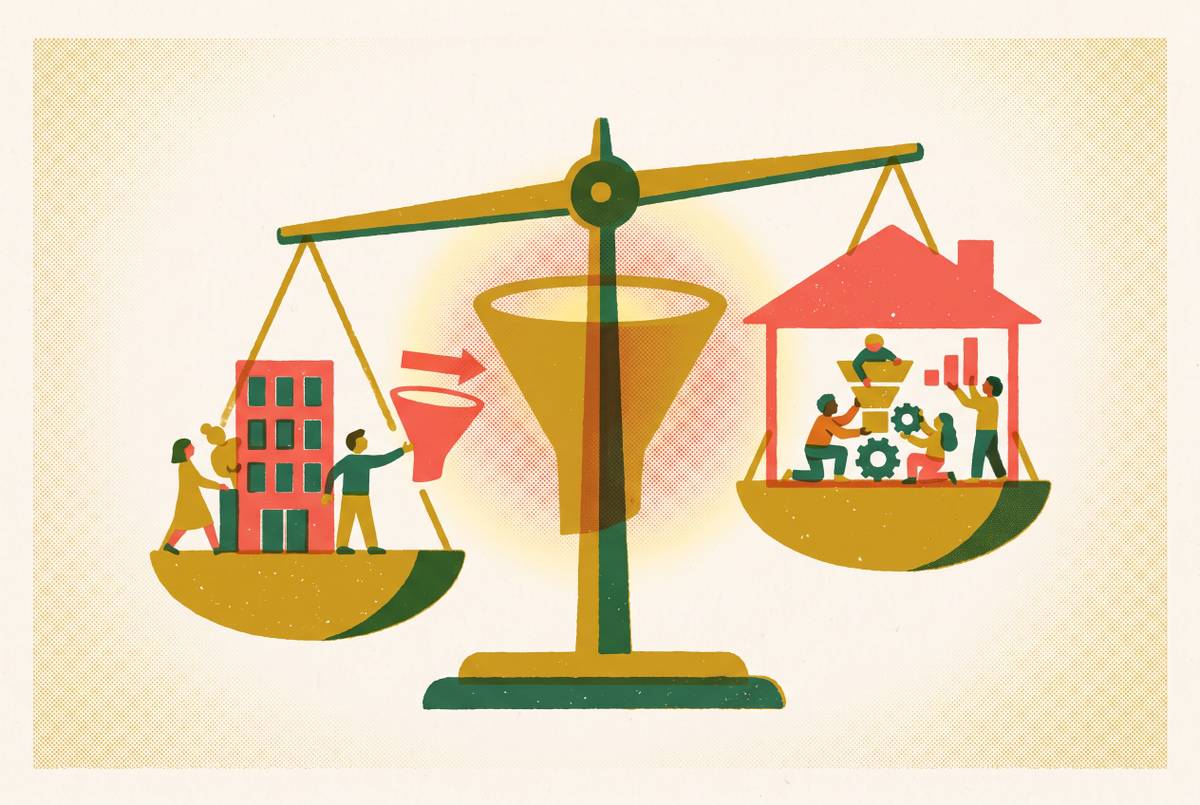
B2B buyers need organizational consensus, not faster checkout pages.
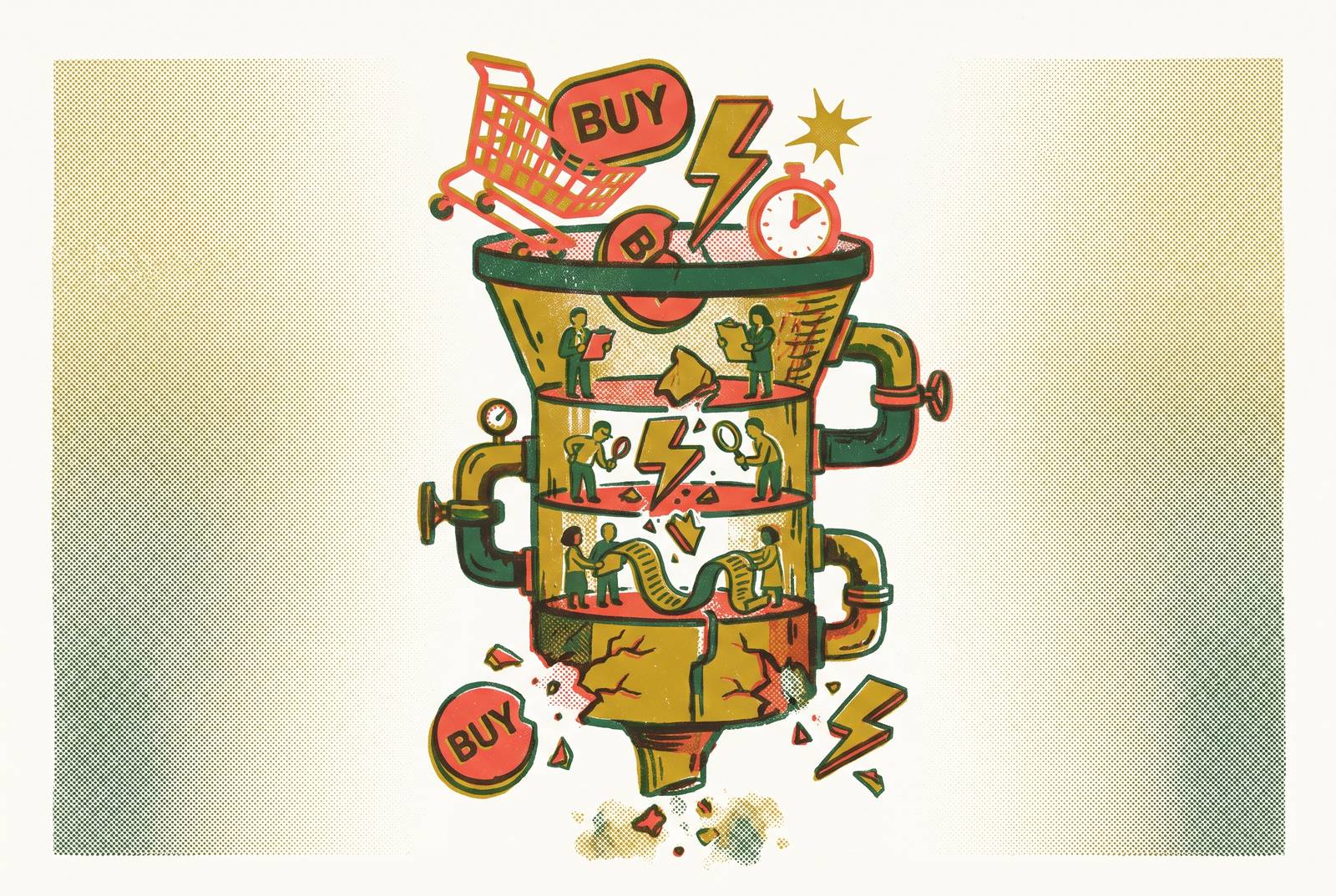
Ecommerce conversion fixes rarely survive a B2B funnel because they target a different kind of decision. A faster checkout or stronger prompt can help one person buy now, but it cannot give a buying group the budget, authority, or agreement it needs. The mismatch runs from page design to measurement and, increasingly, to research that happens before anyone visits a site.
Why ecommerce CRO exists and what assumptions it is built on
Ecommerce conversion rate optimization is built on a clear link between what makes someone hesitate and what helps them act. One person considers a purchase, encounters a barrier, and either completes the transaction or leaves. The standard toolkit fits that situation closely. Checkout friction reduction, urgency triggers, page speed, and A/B button tests all aim to help that person move forward while the opportunity to buy is still immediate.
The measurement model follows the same logic. Sessions or unique visitors form the denominator, a transaction counts as the conversion, and the relevant window runs from minutes to hours. That makes the question relatively direct. Did a change help more visitors complete a purchase during the period in which they were deciding whether to buy? The event being measured sits close to the decision the business wants to influence.
This model works because an impulse-anchored buyer can complete a sale that would otherwise disappear when a barrier is removed in the moment. The person responding to the page can also authorize the transaction, without waiting for a separate group to agree. The playbook is precisely calibrated to that buyer and that buying situation.
How B2B buying is structurally different from the model ecommerce CRO assumes
B2B buying distributes the decision across an organization. Up to ten stakeholders may take part, with different people researching, reviewing, and deliberating before a deal closes. The account is therefore the unit of optimization. An individual visit can reveal interest, but it cannot by itself show whether the company is ready to buy.
Shopify’s B2B CRO guide says it takes roughly four months to reach a decision, with buyers using as many as seven channels. A demo request, quote form, or free trial sign-up is a milestone within an evaluation. The visitor may have advanced one part of the process while other people still have unresolved questions. More elapsed time does not turn that process into a long checkout.
The distinction also explains why some B2B ecommerce comparisons look convincing. A procurement portal serving reorders is dealing with a different buying situation from a site trying to win a new account. Existing buyers placing another order are not acquisition prospects. The way they place orders can make ecommerce benchmarks seem to fit, without showing that those benchmarks capture the work of getting people across a company to agree.
What, then, counts as a better conversion rate? The answer depends on which milestone and population the rate measures, so direct comparisons between purchases, leads, and portal orders can mislead. Pipeline conversion rate, sales cycle length, and customer lifetime value reflect more of the commercial process than raw conversion volume.
Where friction-reduction fixes misfire — checkout and form simplification
Reducing checkout friction assumes that someone is ready to transact but cannot get comfortably through the interface. Unexpected costs at an ecommerce checkout fit that premise. Removing them addresses a genuine last-moment hesitation for a buyer who already has the authority to purchase.
A B2B prospect’s main obstacle often sits elsewhere. Procurement approval chains, budget cycles, and consensus-building happen off-site, beyond the reach of a shorter quote page. A visitor may find the form easy to use but still be unable to move the purchase forward. In that situation, removing a field changes the submission task while leaving the organizational constraint that governs the deal unchanged.
Form simplification can still help at the margin. It can make a useful action easier for a qualified prospect, and unnecessary submission work is not valuable merely because the purchase is complex. But a rise in demo requests may also reflect submissions from lower-quality contacts who face little resistance because they have no budget authority to exercise.
The deeper friction is often the effort of finding information that different roles need. Shopify’s guide contrasts procurement teams seeking pricing and compliance certifications with facility managers seeking specs and maintenance guides. A shorter form cannot reconcile those needs. Pricing transparency, compliance documentation, and integration specs reduce friction in information retrieval.
Where urgency triggers and social proof backfire in consensus-driven buying
Countdown timers and flash-sale framing work on an individual’s fear of missing an opportunity. Their premise is that the person feeling the pressure can act before the deadline. B2B procurement breaks that connection between motivation and authority. A team cannot substitute a countdown for internal buy-in, because the approval process runs on its own timeline. Artificial pressure can therefore look less like scarcity and more like a warning about vendor reliability.
Urgency asks someone who cannot authorize the purchase to act faster while leaving what keeps them from acting unresolved. A tactic designed to overcome hesitation can instead erode trust during an evaluation in which confidence must hold across several people and several months.
Consumer reviews and star ratings address an individual’s comfort, while B2B buyers need evidence that comparable organizations solved comparable problems. Case studies from recognizable industry peers and transparent pricing tiers speak to that evaluation. Each touchpoint can build or weaken confidence, so a momentary increase in response is not enough to establish that the tactic helped the buying group.
Why account-level signals make session-based A/B testing produce misleading results
Ecommerce A/B testing asks whether a change makes more individual sessions end in purchase. Within that model, the experimental unit closely matches the person making the decision. The result has a direct interpretation. A variant that leads to more transactions has helped more people buy, so the measured gain goes beyond more activity within a separate approval process.
Several people from the same company can visit across sessions, devices, and weeks while contributing to one eventual decision. Session-level analysis counts those interactions separately instead of treating them as parts of an account’s work to assess a purchase. The problem begins in the denominator. Counting visits does not establish how many buying organizations have progressed, stalled, or become better qualified.
Consider a pricing-page variant that produces more form fills. That result could reflect easier access for qualified buyers, but it could also reflect more submissions from contacts with less authority. A carefully run experiment cannot settle that distinction if its success measure stops at the form submission.
This is an argument for account-level attribution that connects interactions across sessions, devices, and stakeholders over time. Marketing-qualified-lead-to-sales-qualified-lead conversion, pipeline conversion rate, and sales cycle velocity help the test track more of the buying process it is meant to improve. An ecommerce tool built around sessions cannot show how an account is moving toward a purchase by collecting more session data if it does not bring those signals together.
A page can be better at prompting an individual action without being better at helping an organization buy. Account-level measurement helps the team see whether more people taking action also helps the organization buy. Without it, precision in the experiment can conceal a mismatch in what the experiment measures.
How the B2B buyer journey now begins before any funnel or page can influence it
The mismatch now extends beyond activity that happens on the site. An estimated 35 to 50 percent of US B2B buyer research queries start in a large language model. That places an important part of evaluation before a measurable visit. A competitive shortlist may already be taking shape before the prospect opens a search results page or reaches a vendor’s website.
AI tools synthesize answers. A buyer asking for vendor recommendations may get enough guidance to keep researching without clicking through to the recommended sites. A conversion can still happen later, but site analytics may not connect it to the AI mention that began the journey. No improvement to a session-level test resolves that missing connection, because the initiating interaction occurred outside the session being measured.
B2B is especially exposed because its research is question-driven and deliberative. Buyers ask for category explanations, comparisons, and vendor shortlists, all of which help frame a choice before direct contact. This extends the same structural problem found inside the funnel. The page is only one part of a decision shaped by other people, other channels, and information encountered elsewhere.
What can page optimization influence if the vendor never enters the buyer’s shortlist? It can improve the experience of people who arrive, but it cannot by itself create visibility in the answers that determine whom to consider. A team focused only on session conversion may therefore be refining its site for a shrinking share of the opinion-forming process. The scope of optimization has to reach beyond the visit.
What B2B conversion optimization actually requires — account-level measurement, multi-stage content, and AI-visible infrastructure
The replacement begins with measurement organized around the company. Connecting interactions across sessions, devices, and roles lets engagement signals roll up to an account over time. Without it, the business cannot reliably tell whether people are just doing more or moving forward together toward a purchase.
That foundation also requires measures suited to different stages of the relationship. Pipeline conversion rate, sales cycle length, and time to first order describe progress toward a purchase. Reorder frequency and customer lifetime value extend the view beyond acquisition, while CAC payback connects acquisition spending to its return. Raw form-fill volume records an action without establishing the value or direction of the account behind it.
Procurement teams need pricing transparency, compliance information, and warranty terms, while end users need specs, implementation guides, and maintenance documentation. Optimizing a page solely for one role misses the consensus structure. The content’s job is to make the information needed for agreement accessible across roles and stages.
Because credibility is part of what B2B buyers evaluate, the process for producing that content also needs deliberate review. The recommended approach pairs AI drafting with human review at the outline stage, before resources go into thousands of words headed in the wrong direction. This is a trust safeguard as well as a production choice. Content quality failures can weaken confidence across an evaluation.
Finally, that content must be legible to machines as well as useful to people. Content that is structured, authoritative, and published on a steady schedule can help shape a buyer’s choices before a site visit, when AI answers may be guiding them.