What Fan Bot Data Actually Sits in a CDP vs a CRM
CDPs capture live behavior while CRMs hold relationship records; use each for its purpose.
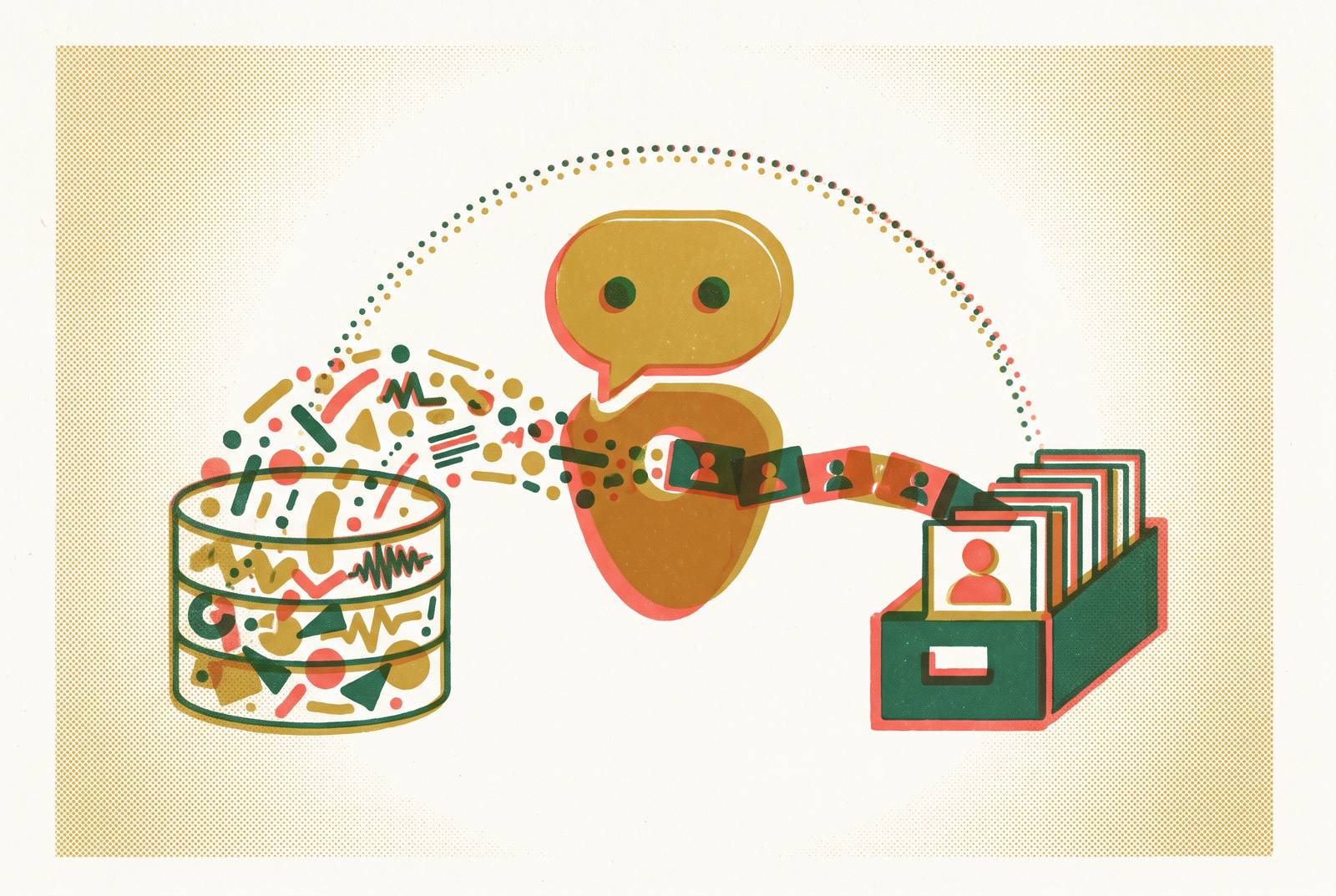
Fan bot data belongs in both a customer relationship management system, or CRM, and a customer data platform, or CDP, but for different reasons. Explicit relationship records belong in the CRM. The CDP holds live behavior and signals that have been linked across identities. The useful distinction is not which product wins, but which layer can give the bot the right evidence at the right time.
Why the CRM-vs-CDP question is really a question about data type and latency
A record of a relationship and a signal of current interest answer different questions. A CRM establishes who a known fan is and what interactions the organization has recorded with them. A CDP links activity from different sources to see whether records that look separate are for the same person and what that person is doing. Treating them as interchangeable forces one system to work beyond its intended role.
CDP profiles update in real time or near-real time, allowing actions to follow live behavior. A purchase history can remain accurate while saying little about what a fan wants during the current interaction. Accuracy alone is not enough for that task. The bot needs data that describes the relationship, the present behavior, or both, with each part available as quickly as the task requires.
What explicit, relational data looks like and why it belongs in the CRM
CRM data begins with a deliberate, identifiable act. A fan fills in a form, a staff member logs a call, or a ticket purchase creates a record against a named account. The resulting data is explicit and structured. Names, email addresses, mailing addresses, and phone numbers establish contact identity, while ticket orders, season-pass renewals, and named merchandise transactions establish purchase history.
A favorite team selected at signup, a survey response, or a self-reported seat-section preference tells the organization what a fan has chosen to say. Sales notes, records of corporate hospitality interactions, messages to and from sponsors, and support tickets add a history of the relationship. The CRM gives that history a working home. Staff can use it to manage sales pipelines, renewal campaigns, and hospitality scheduling without having to reconstruct every interaction.
That purpose also defines the CRM’s natural boundary. A stated preference is not a continuous account of how a fan’s interests change, and a purchase is not a record of everything considered before it. The tool is specialized. A fan bot using CRM data can confirm a purchase, retrieve account details, or look up a ticket because those tasks depend on named records. It cannot infer unstated intent from records that contain no evidence of it.
What behavioral and identity-resolved signals look like and why they belong in the CDP
Behavioral data starts with what a fan does. Fans create it as they browse pages, spend time on content, look at merchandise without buying, or play videos. Mobile app sessions add feature use, push notification opens, and navigation paths. The fan has not submitted a preference. Instead, these continuous signals give the organization evidence from which to infer interest, which requires a different kind of organization from a contact record.
The same distinction holds across other channels. Streaming engagement includes completed highlights, re-watched clips, and interest in particular players, while social likes, shares, and comments can suggest affinity without a purchase. Email opens and clicks describe engagement. In-venue signals add another part of the picture. Concession transactions, entry scan times, and Wi-Fi association data show what fans do beyond what a relationship history alone can show.
A fan who registers with one email address and buys tickets with another may appear as separate records until those identities are linked. A CDP’s identity graph connects device IDs, cookie identifiers, login credentials, and transactional emails through deterministic and probabilistic matching. Its job is to resolve the scattered identity. Downstream systems, including a fan bot, can then use a profile that brings the activity together rather than treating every identifier as a different person.
But linking activity and identifying a verified account are not identical tasks. Behavioral evidence helps describe the person interacting, while a named transaction establishes what that account purchased. That distinction becomes important when the bot moves from suggesting content to answering a ticket question. Neither kind of evidence replaces the other. The CDP supplies the cross-channel context that explicit relationship records were never meant to hold on their own.
The scale problem that makes the boundary consequential — most of a fan base is invisible to CRM alone
Known contacts are only a small part of a sports brand’s digital audience, so a CRM-only view leaves out the large majority. A visitor who browses merchandise without logging in may be showing that they want to buy, while an app user who watches every post-match highlight may be ready to buy a ticket for the first time. A CDP can capture behavioral data from anonymous visitors as well as known contacts.
The blind spot also extends to known fans. A lapsed season-ticket holder whose app engagement has fallen over three months may still appear as active in a CRM because no purchase transaction has changed. The relationship record and behavioral trajectory tell different stories. A bot prompted only with the former lacks the evidence needed to recognize the decline. For anonymous fans, the gap is wider still, because the CRM may have no relationship history to draw on at all.
How fragmentation across a typical sports organization's data systems produces broken fan profiles
A typical sports organization spreads fan data across a dozen or more systems that were not designed to talk to one another. Ticketing platforms such as Paciolan, Ticketmaster, or SeatGeek hold attendance and purchase data, depending on the league and venue. A donor and development CRM may sit separately. Its records may not reflect recent fan behavior, even when another system has captured that activity.
A merchandise and licensing partner may hold transaction data outside the club’s own systems, while a streaming and media rights holder may keep data on viewership and content engagement that never flows back to the club. Mobile app analytics are in a separate analytics stack. Email opens and clicks are in a marketing automation tool, and stadium Wi-Fi and IoT data may be collected without being linked to fan profiles. Collection, in other words, does not establish a shared view.
What happens when a bot queries that landscape? It may find separate “John Smith” records in ticketing, the app, and email without enough linked identity information to know that they describe the same fan. The name alone does not resolve the identity. Each source tells only part of the story, so personalization depends on which part the bot gets. Without a connective layer, adding more sources can leave the organization with more evidence but no coherent person to attach it to.
How the CDP and CRM fit together in a working architecture — and what each must not try to do
The CDP sits beneath the CRM as the data foundation, ingesting behavioral signals and resolving identities across sources. It builds audience segments from cross-channel behavior and updates them continuously. The CRM consumes the resulting enriched profiles. Email platforms, personalization engines, and fan bots can also use that shared context rather than assembling their own disconnected versions of the fan.
Sales pipelines, renewal timelines, hospitality scheduling, and sponsor communications belong with the human-managed history of calls, support tickets, and meeting notes. Campaign execution can use segments already defined and enriched by the CDP. The CDP supplies context for action, while the CRM supports the recorded interactions and workflows through which staff manage the relationship.
The boundary breaks when the CRM is asked to become the identity-resolution layer. Matching device IDs, cookies, and credential sets at scale requires the deterministic and probabilistic capabilities of the CDP. That responsibility belongs beneath the relationship workflow. The reverse is just as important, because an enriched profile does not replace logged calls or renewal management.
What fan bot data specifically needs from each layer to function well
For a fan bot, this architecture becomes a routing decision. A question about tickets for Friday’s game requires a verified, named CRM record, as do purchase confirmations and order history. Membership status and renewal information also depend on structured relationship data managed by staff. Support questions need the service team’s interaction history.
Personalized content and offers need a different route. A bot drawing on CDP data can use aggregated behavior to recognize interest in a player’s highlights or a decline in engagement despite an unchanged purchase record. Browsing premium seats recently tells the bot more about what a fan wants now than an old ticket order can. A fan who has browsed premium seating three times this week presents a different intent signal from one who has shown no such behavior.
Identity resolution also helps with sessions where the fan is anonymous or only partly identified. It helps work out which activity belongs together before the bot serves personalized content, while questions about an account still need the verified records kept in the CRM. This is a distinction between context and confirmation. A CRM-only bot may give the same generic response to a casual attendee and a highly engaged fan whose interest is cooling if their purchase records look alike. The CDP supplies the behavioral contrast that the transaction history lacks.
The quality of that routing depends on the source data. Content and data feeding AI systems need to be structured, legible, and machine-readable where they originate. Otherwise, access to more systems leaves the bot facing the same fragmented evidence as the organization itself. Model sophistication cannot repair a missing data relationship.
The organizational question that the data-type map forces — who owns which layer
The architecture can fail during the season because no one owns the work of keeping data flowing correctly. Someone must therefore answer for each layer. Who checks whether merged profiles are accurate? Who governs which behavioral signals enter the CDP and which are excluded on privacy or consent grounds?
That ownership must extend to the handoff between systems. Someone must decide when an enriched segment reaches the CRM for campaign execution and how much delay is acceptable. Someone must also audit the bot’s sources when answers become stale or inaccurate. These are continuing responsibilities. Without them, the data-type map describes only an intended architecture.
Control over the data is the final test. The organization needs the ability to export full profiles, events, consents, and engagement history. A fan data strategy can support useful AI only when its ground truth is retrievable and under the organization’s control. Neither a CDP nor a CRM meets that requirement if the organization cannot access and take its own fan data with it.