How Fan Bots Decide What to Say to Each Person
Unified profiles and language processing let bots predict what fans need next.
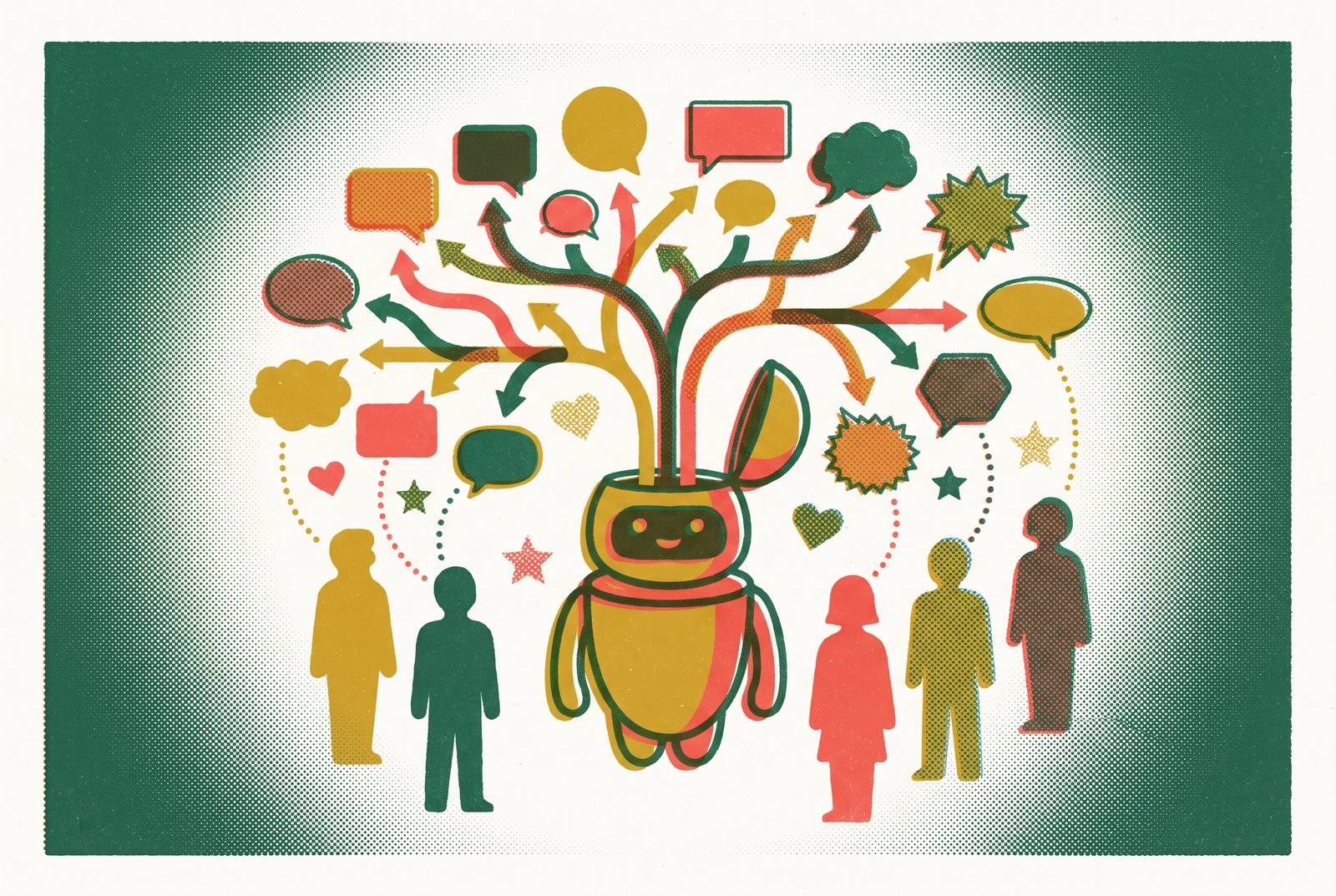
Fan bots decide what to say by connecting a person’s history, interpreting their words and anticipating what they might need next. Personalisation depends on those layers working together. This article explains how that process works, why its usefulness depends on the content behind it, and where human judgement must constrain what the system can do.
Why fan bots cannot personalise from a single data source
A ticket purchase tells a sports organisation something about a fan, but not everything needed for a useful conversation. Broadcasting, ticketing, apps and merchandise have historically operated on separate platforms, each holding a different fragment of the relationship. Tech Mahindra’s analysis describes the result as “fragmented fan footprints rather than a complete view of the journey”. The records exist, but the connections are missing. A bot drawing from just one platform inherits that limited view.
Consider a fan who buys a ticket through one app and streams a match on another. Each platform records what the fan does, but neither on its own can link the matches they attend with what they watch. How much can the bot really personalise from that? It can respond to the slice it sees, while missing the context held elsewhere. Streaming platforms have meanwhile taught fans to expect experiences that fit their habits, language and circumstances, so those gaps are harder to overlook.
How bots assemble a unified fan profile from scattered touchpoints
The first mechanical step is to bring those separate records into a unified fan profile. Tickets, streams, app clicks and purchases become parts of one person’s history. In the ticket-and-stream example, the organisation can consider both interactions when deciding what is relevant.
That history grows as the fan has more interactions. The bot’s picture of a fan at the end of a season can therefore be richer than it was on opening day. Personalisation depends on a profile that can reflect the relationship as it changes.
Organisations are advised to start with campaigns that have a clear goal, including schedule releases, ticket sales and merchandise drops, before trying complex multi-touch campaigns. This gives the profile a focused proving ground. A wider range of interactions is useful only if the organisation can turn the information into responses that fit the person receiving them.
What NLP does with the profile once it exists
A unified profile gives the bot context, but context alone does not tell it what a fan means in a new message. Natural language processing, or NLP, supplies that interpretive layer. Fans do not all use the same words. They ask the same questions in different ways, use abbreviations or switch languages, so a system that only matches keywords can miss the intent behind a request.
NLP allows those variations to resolve to the same intent, helping the bot answer consistently without requiring fans to follow a fixed script. The distinction is between recognising words and interpreting a request. The profile can then inform the response to that request, rather than sitting apart from the conversation as unused background. Personalisation becomes useful at the point where history and present intent meet.
Yet understanding a request is different from anticipating one. NLP helps establish what the person is asking now. It does not, on its own, establish what they are likely to want next. Keeping that boundary clear explains why a bot may understand a question well without being able to make a useful proactive recommendation.
How predictive analytics shifts the bot from reactive to proactive
Predictive analytics uses patterns in the unified profile to anticipate needs before the fan formulates a request. The inputs can include tickets bought repeatedly for weekends, merchandise tied to a particular player and frequent live-stream check-ins. The shift is from interpretation to anticipation. Rather than waiting for a question, the bot can surface content or an offer that those patterns suggest could be relevant.
A favourite team supplies one clue, while player preferences and purchasing history add context that the team preference alone cannot provide. Prediction draws on the relationship between those signals. It remains an estimate of what the fan wants, however. A useful recommendation and a confident assumption are not the same thing.
The commercial stakes are visible in conversational campaigns, even where the evidence does not isolate prediction itself. Google’s RCS for Business case study and Clerk AI’s customer story describe how the Los Angeles Rams used RCS messaging with a conversational AI layer to release their schedule for the 2025-2026 season. The campaign offered ticket purchase and increased ticket sales compared with an SMS control group. That comparison supports the commercial value of the conversational approach, without proving that predictive analytics alone produced the improvement.
What a fully profiled, NLP-aware, predictive bot looks like in practice
RaceMate’s knowledge base includes driver biographies, team history and circuit data. Those are concrete foundations for a Formula 1 companion. They give the bot material from which to answer questions, although the existence of that knowledge base does not by itself demonstrate every profile or prediction capability.
A different form of contextual support appeared in Tech Mahindra’s Global Chess League Season 3. Spectators heard real-time commentary through their own headphones while large screens showed AI-powered evaluation bars. The format combined individual listening with shared visual information. It illustrates how relevant information can reach people within a crowd without requiring every spectator to consume it in the same way.
The chess example is not evidence of an individually predictive chatbot. Its relevance is narrower and more useful than that. It shows that the delivery of context can extend beyond a chat window into the venue and broadcast experience. Taken with a knowledge-backed companion such as RaceMate, it makes the underlying distinction clearer. Information about the sport, an interpretation of the fan’s request and a prediction about their next need are separate capabilities, even when a finished experience brings them together.
The ethical constraints that personalization at this depth creates
The deeper the profile, the greater the scope for influencing a fan. Hans Westerbeek’s perspective paper in Frontiers in Sports and Active Living describes how chatbots and virtual assistants often present predefined options that steer users towards organisational goals. The choice remains, but its frame is controlled.
Recommendation systems can also exploit confirmation bias by returning more of what a person already prefers. The same paper identifies risks around echo chambers and younger fans’ susceptibility to digital nudging and personalised marketing, including gamified rewards and AI-driven loyalty programmes. Popularity-weighted loops can disadvantage underrepresented sports, women’s competitions and emerging markets. Giving people more of what they want is therefore only part of the answer. Responsible personalisation must also leave room for discovery.
Tech Mahindra’s analysis identifies regional frameworks including GDPR and India’s DPDPA as constraints on maintaining a unified fan view. Fans must be told clearly what data is collected and how it is used. Design for discovery and compliance from the outset, rather than treating a more detailed profile as an unrestricted licence to persuade.
Why human review belongs inside the content pipeline, not after it
Once a problematic response has reached a fan, a final review cannot prevent that exposure. Human-in-the-loop systems instead place reviewers at several stages, from prompt refinement to final quality assurance. The timing changes what review can accomplish. People can guide the material and instructions that shape a response, rather than only judging finished output after the underlying decisions have been made.
The amount of review should follow the risk. Legal, financial and brand-sensitive content requires more checkpoints than evergreen or low-stakes material, so classification determines how far the pipeline can proceed autonomously. Conditional triggers add another checkpoint when a generation’s confidence score falls below a threshold. The system then withholds publication and routes it to a reviewer. This creates an opportunity to catch an unsupported answer before it enters a live conversation.
More advanced agentic pipelines can track what competitors do, find gaps in content and write drafts for people to approve. Automation handles more of the production work. Human reviewers still have the right to reject material before it ships. For organisations deploying fan bots, the lesson is to build that authority into the workflow, with more scrutiny where a misleading or manipulative response could do greater harm.
How the content that feeds and surrounds fan bots earns visibility in AI answers
The material moving through that workflow shapes both the bot’s answers and the organisation’s wider presence in AI-generated responses. A fan profile cannot compensate for an inaccurate knowledge base. RaceMate’s driver biographies, team history and circuit data show how knowing the subject differs from knowing the person. A bot needs relevant information about both to give a response that is personal and credible.
That makes content quality more than a publishing concern. AI answer engines assess topical depth and answer clarity, rather than relying on a traditional link graph alone. Detailed explanations of how a system works can give those engines useful material to cite when answering relevant questions. Visibility is not guaranteed by publishing more. The connection is between substantive, clear content and its usefulness as a source for an answer.
Consistency across platforms supports that usefulness. If publications describe the same product or organisation in conflicting ways, AI systems can surface the contradictions as confused or inaccurate answers. A bot that talks to fans and an external answer engine may do different jobs, but both need descriptions they can rely on. The editorial pipeline therefore has a second responsibility beyond preparing conversational material. It must keep the organisation’s public account of itself coherent enough to support accurate answers elsewhere.
What organisations need to build before a fan bot can do any of this well
For an organisation starting this work, the first requirement is a dependable way to bring fragmented fan interactions together. A strong data platform supports that effort, but technology alone does not establish what the organisation should do with the resulting profile. The purpose needs to be bounded.
The rollout should then widen as the profile proves useful. Quizzes and scavenger hunts introduce more complex interactions, making them later steps that depend on reliable foundations. Privacy, transparency and discovery also need to shape that progression.
Before working at a larger scale, the organisation should set up its editorial and review workflow. That includes deciding which material requires human approval and when uncertainty must stop automated publication. Oversight cannot be an afterthought to greater throughput. The content base also needs to be detailed, accurate and consistent enough to help the bot talk with fans and help the organisation appear in external AI answers.
Measurement completes the practical starting point. Engagement rate and ticket-sale lift provide useful short-term signals, but they do not describe the full relationship. Fan retention and lifetime value test whether that relationship endures. Tracking whether the brand gains or loses ground in AI-driven conversations about its category gives a wider view of how visible it is. Together, these measures move the test beyond whether the bot produced a response to whether what it said helped build a lasting fan relationship.