When Fan Engagement Bots Damage Brand Relationships
Fake engagement erodes trust faster than the metrics it inflates can rebuild.
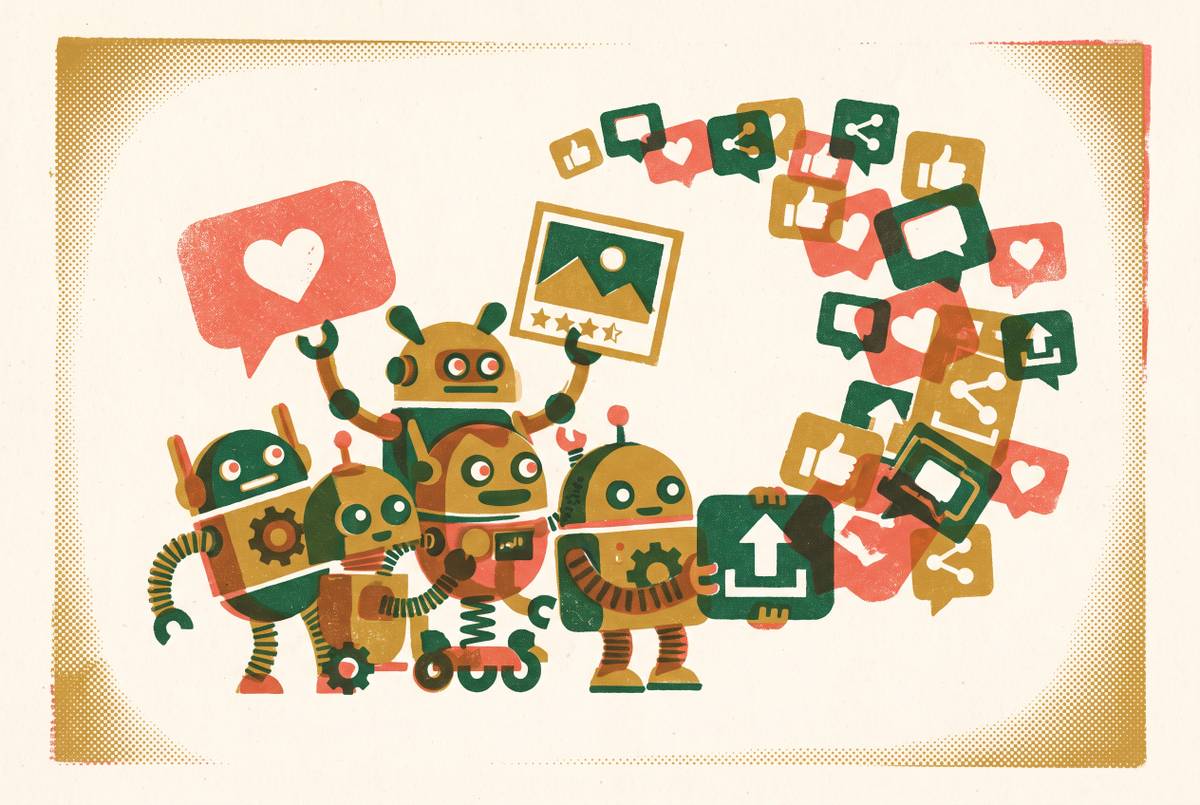
Brands deploy automated fan activity to exploit the credibility that visible follows, likes, and views can create. The thinking runs simply: when an audience looks large and active, a real one may follow, so making something look popular is supposed, in theory, to produce popularity itself. Three kinds of bot are used for this, with each one working its own lever. With Social-metric bots, brands inflate followings and reaction counts so the space appears busy and participatory. Automated tools for purchasing, account creation, credential stuffing, and scraping target limited drops, clearing out stock before genuine supporters get a chance. Bots designed to game platforms fabricate engagement that skews discovery and recommendation systems, boosting metrics within For You feeds or Creator Marketplace rankings. The thing connecting all three is cost. Because operating them costs so little relative to their immediate payoff, the tactic keeps expanding despite improved platform defenses.
How AI-generated engagement bots now pass as human
AI-generated replies and organized sham interaction have become too polished for spam to be easy to spot. Replies can now pass for real users, while the systems driving them spread fake likes and views through large account pools simultaneously. Taken in isolation, those old clues no longer show very much, since the automated accounts keep learning and reshaping their behavior. By 2026, each bot may be guided by models trained to act like a real visitor, showing natural cursor motion, credible in-app or site navigation, and behavior that defeats detection based on past patterns. What appears to be a lively community may largely be artificial, leaving both the account’s brand and its genuine fans unable to tell. The audience’s unspoken pact with a brand, trusting that nearby likes and comments come from real people, quietly turns false before anyone catches it.
Product-drop bots and the specific moment a brand's promise to loyal fans is broken
This is where the damage turns visceral. Bots do more than slow down checkout or cause a logistical headache. They shatter the brand's commitment to its audience that everyone gets an equal shot and dedication matters. Automated buying tools complete purchases almost instantly, locking up stock while an actual customer's screen is still rendering. Automated account generators flood the system with fake identities to bypass purchase caps designed for fair distribution. The fallout is public and points straight at the company, with goods appearing on secondary markets at inflated costs moments later while loyal supporters who tried repeatedly leave empty-handed and furious. Fans blame the company behind the release, not the person running the automation. The harm goes far beyond a single rough release morning. A limited release only works because of the urgency, the feeling that getting one matters since not everyone could, and that hinges on genuine scarcity actually landing with genuine fans. Bot stockpiling hollows out the mechanism at its core: the company still shoulders the expense of building buzz yet forfeits the reward of truly delivering on it.
Social-metric bots and the corruption of the data brands use to understand their own communities
Bots that automate product drops shatter a public commitment in one instant. Bots manipulating engagement metrics inflict a subtler, longer-lasting wound by blinding companies to who actually follows them. Once fabricated accounts or interactions make up a significant portion of an audience, every decision relying on those numbers goes awry without the company realizing it. This harm spreads across three fronts simultaneously: wasted budgets pursuing phantom consumers, corrupted analytics unfit for any purpose, and public embarrassment when the artificial growth surfaces. Inflated follower counts corrupt the very measurements companies rely on to identify effective strategies, pinpoint successful platforms, and understand their genuine audience. Goodhart's Law helps account for the pattern's consistency: once engagement counts, follower totals, or view numbers are treated as goals, perhaps for brand deals, algorithmic placement, or a company KPI, they stop reflecting how healthy a community really is. A brand can feel the damage even when someone else paid for the bots. Whether the company deliberately pads its stats or innocently hires a creator followed largely by bots, both paths leave marketers reading the same tainted figures, with the latter scenario now more common and harder to catch. In either case, fake metrics cover up real problems. When a brand loses sight of who is actually in its community, it makes worse choices for those people: bot-skewed metrics gradually pull the company away from the real fans obscured by the fake totals.
Platform purges as a public credibility event
In time, people can see how much of the audience was genuine and how much was padded, and that is when the damage turns into something public. TikTok answers in stages: it begins by removing bogus follows and likes, may then restrict the account so its posts or discoverability in Search and For You shrink, can move next to short-term suspensions, and may ultimately ban serious or repeat offenders permanently. One result is especially harsh. When fake followers or video views alert TikTok to manipulation, the account may be flagged, shut out of its Creator Marketplace, and lose official brand deals. The shortcut defeats its own purpose: boosted metrics were meant to open monetization, but the punishment closes off the same revenue path. The harm extends beyond a single punishment. Once platforms purge the artificial engagement, they mark the profile for cheating, leaving genuine visibility lower than it stood prior to introducing those bots. The damage to one's standing only deepens afterward. A sharp, public decline in followers reveals to actual supporters, journalists tracking the profile, and prospective collaborators that the audience they believed in was largely fabricated, dismantling the trust those padded metrics were designed to build.
How bot-generated engagement poisons the signals AI answer engines use to describe a brand
So far, the damage traced has happened within social networks, whose numbers can bounce back or simply start over. A newer problem is harder to undo. Automated activity that inflates or degrades a brand's reputation escapes the network where it originated. Such signals become the raw material for AI answer engines crafting a brand's story, which lingers far longer than any follower tally. Such engines increasingly dictate how prospective customers discover and evaluate a brand, synthesizing standing from user feedback, Reddit posts, message board conversations, and broader online chatter. If a brand's audience is largely artificial, it fails to generate material those tools can leverage. What comes out instead is low-credibility static no one can reference, not the kind of firsthand, checkable sources these systems are designed to surface and rely on. That static lingers unless something replaces it. Negative or fake content on review platforms and forums shapes how AI systems talk about a brand until credible, referenceable material pushes it aside. The reverse holds equally: brands earning durable citations invest in genuine community engagement, verified customer voices, substantive conversations, and authoritative content, while those substituting automation for this effort produce nothing referenceable.
What genuine community signal looks like to an AI answer engine
Real signals and bot-made signals pull a brand's story in opposite directions as an AI engine begins assembling its narrative. Those systems prize content whose claims hold up when cross-referenced with what other sites report, and bot-driven engagement skips that step by churning out activity with no fact-checkable substance in it. A page with no Google ranking can still be pulled into an AI answer engine's response, because showing up in search results and being cited are separate functions that follow different rules, though the likelihood of a citation still rests largely on which engine is doing the looking and on cues that live beyond the page's own text, such as whether a brand's name appears elsewhere online or whether it surfaces in relevant directories, rather than on the layout of the page's content itself. That is the threshold for real community-building: publish steadily, measure genuine citations as they accrue, see which pages each engine surfaces, and revise around what is actually landing. As real communities generate reviews people trust, deeper discussion, and steady mentions across other places, their signal strengthens over time. Brands do not give AI engines anything useful when their “communities” are largely manufactured by bots, even if the metrics look huge.
How brands detect bot-corrupted engagement
Spotting bot-driven harm early requires a wider diagnostic view than one figure can provide, since today’s more sophisticated bots are designed to pass isolated tests. A brand has to read several signals at once and notice where they do not match. A sudden jump in followers alongside an unchanged engagement rate is a clear red flag, because genuine audience expansion should bring likes and comments up with it. If comments arrive in brief bursts rather than following the active hours expected from a real audience's location mix, that suggests automation. Another marker to check is a gap between the audience's location and the creator's focus, posting language, or declared market, since real followers usually gather where the content matters to people. When the identical generic comment shows up under totally unrelated posts, that alone is a strong tell, since no real person answers a recipe clip and a brand announcement using the very same line. No single signal proves anything on its own, which is the whole idea: a brand that reviews them side by side, every time, spots what one tally of followers or look at engagement rates would overlook, and does so prior to the money, the metrics, and the loyalty of actual supporters going toward a following that never truly existed.