How to Ghostwrite for an Executive Without Losing Their Voice
A voice document and regular check-ins keep ghostwriting authentic.
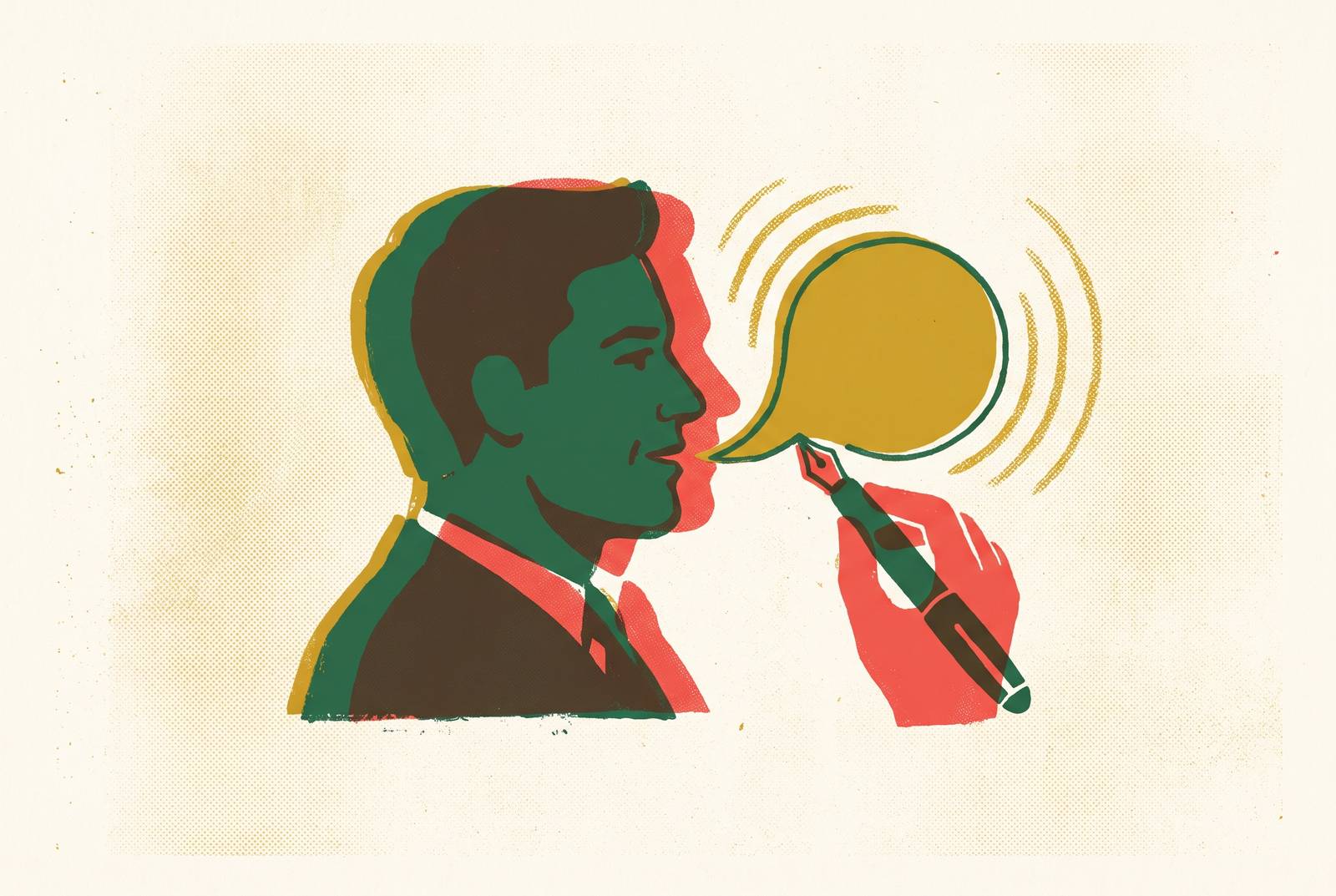
Executive ghostwriting preserves a leader’s voice, which even a talented collaborator cannot simply guess, by treating it as something to capture, document, and keep testing. The craft is repeatable. Thorough intake, a voice document the team can use, a clear review process, and regular checks for drift let someone else do the writing without taking over the thinking.
Why executive voice fails in ghostwritten content — and what that failure actually looks like
A tech startup founder built a following through unconventional, bold takes on change management. Then she handed her social media to an agency with no briefing protocol. The posts still had the facts right, but played it safe and lost her personality. Engagement plateaued, yet no one could pinpoint when the shift had happened. Nothing was obviously wrong with any single post.
That is what voice drift looks like. The public persona stops reflecting what the leader thinks, believes, or values, without a built-in way to detect the departure. A ghostwriter working from secondary research or a brand style guide may know the business while missing the judgment that distinguishes its leader. Applied across executives, a generic house style makes everyone sound like no one. The failure is structural, so finding a more gifted ghostwriter cannot by itself fix the missing access to the executive’s thinking.
What good ghostwriting is actually doing — and what the executive’s real role is
The executive supplies expertise, ideas, and approval, while the ghostwriter supplies craft, consistency, and time. Ghostwriting is the work of turning the executive’s actual ideas into an argument that another person can follow.
A ghostwriter needs to understand the subject’s intent well enough to push back, while the author needs to explain why a detail deserves its place. Neither contribution replaces the other. The author’s attachment to a line does not automatically make it useful to the audience, but the ghostwriter cannot assess its purpose without understanding the author’s reasoning.
For an executive, that means a narrow but non-negotiable role. They must be the source of judgment, review the work for voice accuracy, and attend recurring conversations. They do not need to draft. Many executives express strong opinions more readily in conversation than on a blank page, so the working relationship should draw on that strength.
The intake interview — the single decision that determines whether everything downstream works
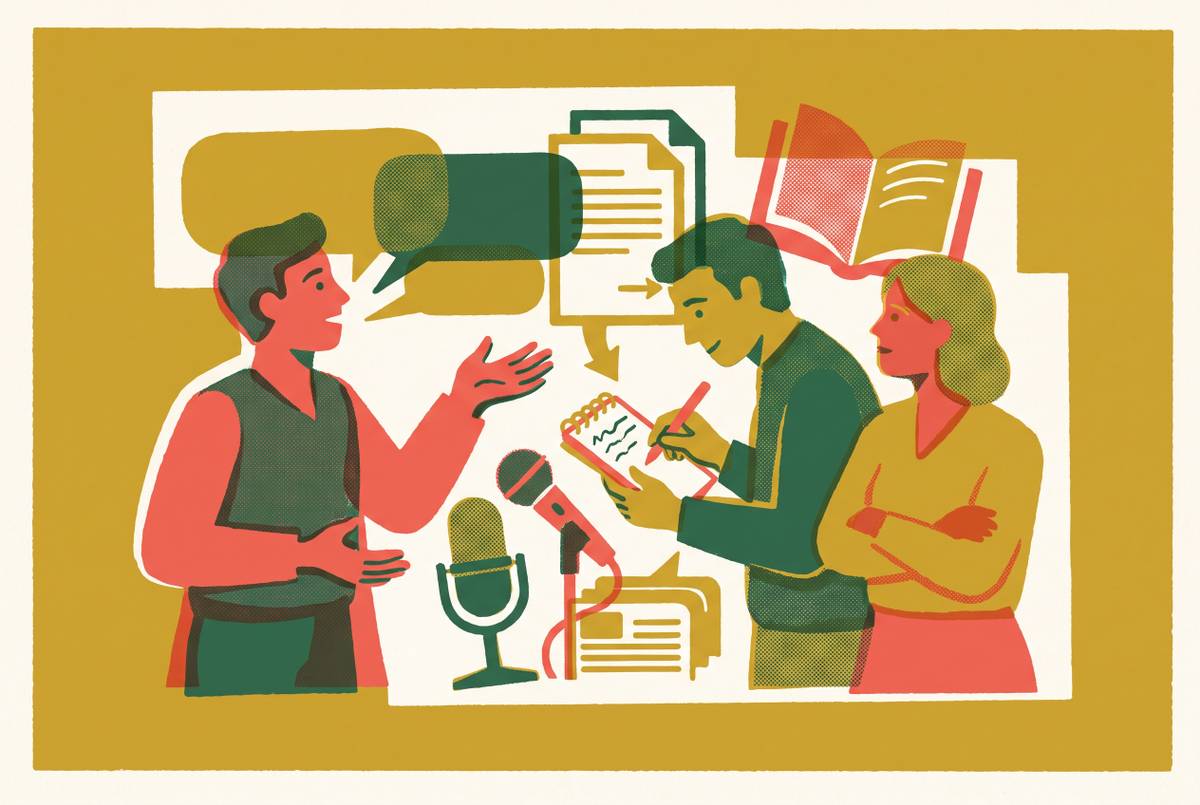
To put that division of work into practice, start with a structured interview that surfaces reasoning as well as topic knowledge. Asking for thoughts on change management in general tends to get a general answer. A question anchored in a real client situation asks the executive to explain what happened, what they decided, and why. A named disagreement or a specific number gives the conversation something firm to work against.
The follow-up is where voice often becomes clear. What made the executive reject the other position? Which example do they reach for without prompting? Listen for the frames they apply, their instinctive comparisons, and the sentences they finish without hesitation. These show more of how the executive thinks than a prepared account of the company’s views.
Record and transcribe the conversation so that those details survive it. One well-run 30-minute interview can yield a bylined article, several LinkedIn posts, a quotable sales-deck slide, and a newsletter feature, roughly five working assets. That leverage depends on the source material being specific enough. Assigning one dedicated ghostwriter to the executive, preferably a senior ghostwriter who understands the business, also lets familiarity build across interviews. Over time, that ghostwriter becomes better able to distinguish characteristic language from an off-register remark.
Turning the interview into a voice document the whole workflow can use
The transcript preserves the conversation, but a voice document makes its lessons usable across the workflow. It also reduces dependence on one ghostwriter’s memory. A brand tone-of-voice guide says how an organization should sound, while an individual voice document records how that person sees the world. Both can be useful, but they answer different questions. A company’s preferred tone cannot stand in for a leader’s convictions or idiosyncrasies.
The document needs written positions on pressing issues, with specific claims the executive can defend based on their own experience. Those positions should be ones the leader is willing to hold even when they invite disagreement. Beside them belongs a working library of the leader’s language, including recurring stories, go-to analogies, and characteristic sentence structures. Small choices deserve attention too. Contractions, favored superlatives, and regional phrasing can distinguish a person’s speech from the language expected of their role.
The anti-brief records the other side of that identity. It names what the executive will not say, the stances they reject, and the topics that are out of bounds. Together, the positions, language library, and anti-brief give everyone who works on the content the same reference to work from. Update that reference as the executive’s thinking changes and the ghostwriter learns more.
The drafting and review stage — where voice documents get tested and voice drift gets caught
At draft stage, the transcript supplies the material and the voice document supplies the check. A piece can get the facts right and still make a judgment the executive would never make. It can also defend the right position in language that feels borrowed from a corporate brochure.
For the executive’s review, read the final draft aloud. Give this step time. Does the sentence sound natural when spoken by the person whose name will appear above it? A phrase that looks polished on screen may reveal itself as alien in speech. The review should confirm that the judgment, phrasing, and opinions are genuinely theirs.
The ghostwriter also needs the right to question changes. As the Moehringer example suggests, restoring a favorite line can weaken the argument for its audience. Replacing the leader’s own phrasing with corporate language can also erase what the intake captured. Legal or brand concerns may require discussion, but calling a contrarian point “too strong” should not automatically settle its fate. The partnership needs enough shared understanding to distinguish a necessary correction from an edit that merely removes personality.
Keeping the cadence — why recurring short conversations beat periodic long ones
After the first piece, voice preservation becomes a scheduling problem as much as a writing problem. The practical model is a recurring fifteen-minute conversation every couple of weeks. Put it in the content calendar. A focused talk about what the executive thinks now gives the ghostwriter fresh material without putting the executive through another long briefing.
Keep the format anchored in something specific, as in the original intake. Each conversation can add language to the library, sharpen the ghostwriter’s understanding of the executive’s reasoning, and surface material for other formats. It also asks the leader to articulate a present view.
Without that touchpoint, an agency is left with what it already knows, including secondary research and industry convention. The voice document can then become a record of how the executive once thought. A periodic audit may expose that gap, but it cannot supply the missing conversations. A regular slot on the calendar makes time with the executive something the team can count on, rather than something that depends on goodwill and spare time.
Where AI belongs in this process — and where it does not
Once people have done that work, AI can speed up production. The executive speaks, the conversation becomes a transcript, and AI can extract arguments and structure a draft against the voice document. An editor who knows the voice then sharpens the work and cuts what does not land. The sequence is essential to the result. Asking AI to supply the position before capturing the executive’s thinking reverses the process.
Useful applications include briefs, outlines, first drafts from transcripts, metadata, format variants, and repurposing across channels. AI can also help identify repeated expressions in authentic recordings of past speaking engagements. Past ghostwritten work gives it less to go on because the voice may already have drifted. Finding patterns can help the team document the voice, but it cannot tell them whether a phrase or position is truly the executive’s own.
People must conduct the intake interview and positioning calls, make the final call on voice, and take responsibility for the claims they publish. Review belongs at intermediate checkpoints and at the end to catch mismatches before they accumulate as production speeds up. This is how AI can make a recurring publishing cadence more economical without becoming the voice-capture method.
Letterstory, an AI content and visibility platform, is one option for this production layer, with multi-stage Flows in which a human reviews and accepts or rejects every AI suggestion. A voice library and anti-brief can serve as the checkpoint for each edit before publication under the executive’s name.
Why well-ghostwritten executive content is also better positioned for AI citation
The same specificity that preserves voice also helps make content useful to AI answer engines. A clear position supported by named evidence and defended claims gives those systems more to cite than a statement hedged into neutrality. The claim comes from the executive’s own judgment, and the ghostwriter makes the reasoning clear enough for those systems to use.
Consistent, authoritative executive content also expands the public evidence associated with a leader and company. That can support discovery in AI-generated answers, though it does not guarantee a citation. Good ghostwriting and good AI-citation positioning share practices rather than requiring two separate versions of the executive’s thinking.
Placement adds another condition to that opportunity. Incremys found that only 44% of AI citations come from owned sites. Publishing on the executive’s own blog or LinkedIn therefore does not reach the full range of sources that answer engines draw on. Trade publications and third-party platforms can provide citation opportunities beyond owned channels. The craft remains the same, but where the argument appears affects its chances of being found and cited.
The process in practice — what a functioning executive ghostwriting engagement actually looks like
For a team evaluating an engagement, the useful test is whether each stage has a defined input and a clear check. Asking how a provider captures and keeps the executive’s voice is more revealing than asking whether its writers can sound authentic. A process that works makes clear what the executive needs to do without making them fix the draft for free.
Voice capture begins with a structured, recorded, and transcribed interview. It should capture how the executive reasons and speaks as well as what they know about a topic. Voice documentation then turns that material into written positions, a language library, and an anti-brief shared with everyone who touches the content. Significant new intake should update the document to give subsequent work a current reference.
The first draft should use both the transcript and that reference, whether a ghostwriter or AI writes it. Review should include the executive reading the final draft aloud and judging whether the opinions and phrasing belong to them. The ghostwriter needs room to question changes that weaken the argument or make it sound safe and generic. Between pieces, the recurring short conversation keeps supplying current views and language.
Drift correction completes the operating model. When engagement shifts or the executive flags language that does not sound like them, the response should go beyond polishing the troublesome sentence. Return to the intake, update the voice document, and review recent drafts against it. That correction repairs the source of the mismatch rather than leaving the same weakness in place for the next piece.