Compliance and Moderation Risks in Fan Engagement Bots
Platforms tightened enforcement while regulators moved in simultaneously.
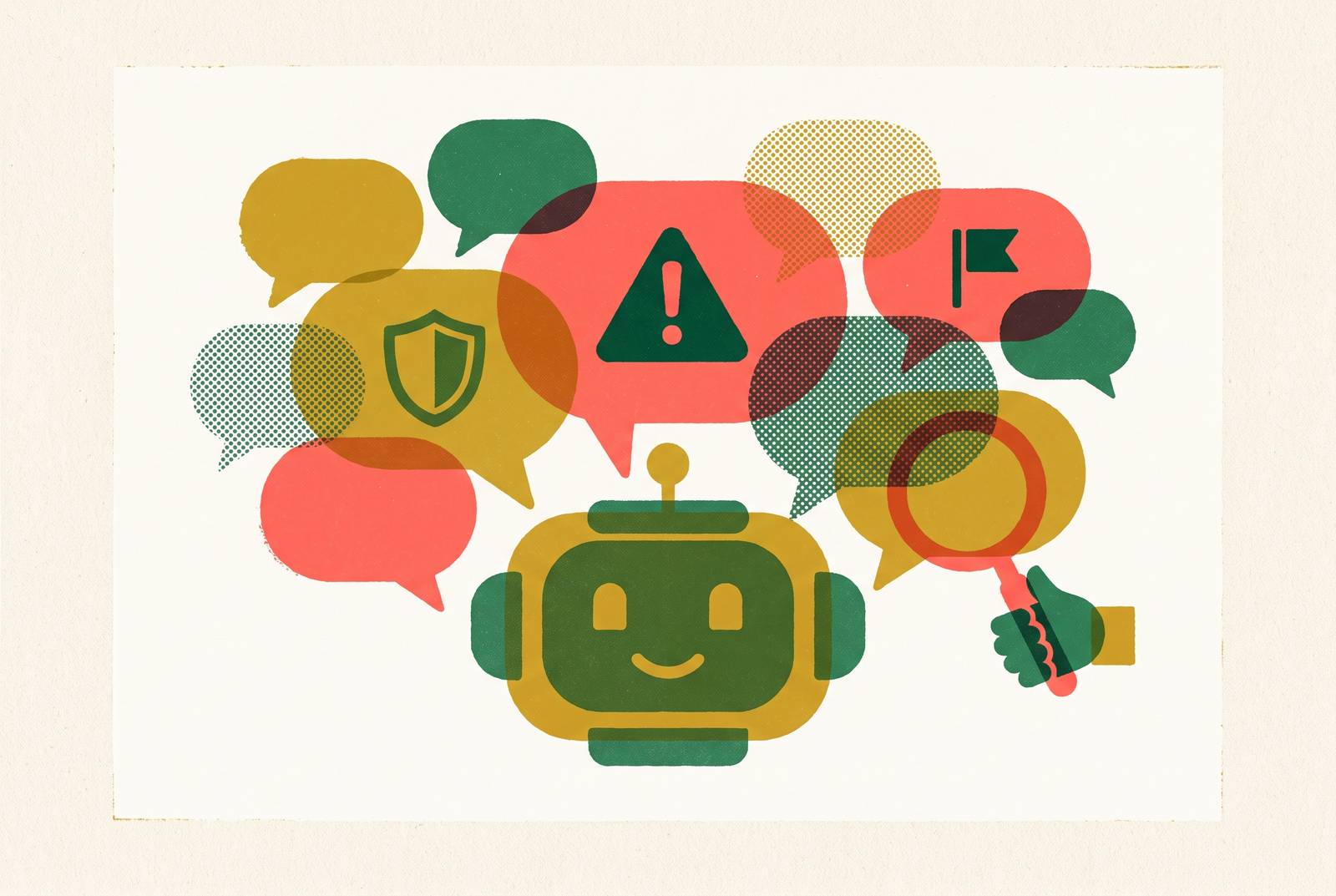
Fan engagement bots have left their former ambiguity behind and now draw enforcement scrutiny because the shift is being driven by three distinct forces rather than a single cause. Individually, each force would amount to a manageable compliance change that a brand could address in due course. Together, they put bot deployment into the category of day-to-day operating risk, demanding constant oversight instead of a one-time fix.
Fan Engagement Bots as a Compliance Problem
Meta's enforcement posture changed enough between 2022 and 2026 that identical automation behavior now produces a different outcome entirely. A tactic that drew a soft warning in 2022 now triggers an immediate account restriction, and Meta made that shift without a public announcement, documented only after the fact in third-party compliance guides tracking deprecated message tags, stricter App Review requirements, and a penalty scale that now runs all the way to permanent account disable. TikTok has its own version of the same logic: fake engagement sits under its integrity and authenticity policy, and consequences climb from stripped follows and likes through account restrictions that limit posting, search, and For You feed visibility, up to temporary suspension and, for repeated or serious violations, a permanent ban. X moved in the same direction in March 2026, widening what counts as "inauthentic behavior" to the point that tactics tolerated as recently as 2024 are now grounds for suspension.
Regulators moved in at much the same time. On September 11, 2025, using its Section 6(b) authority, the FTC demanded information from seven AI companion chatbot operators about promotional claims, safeguards, revenue models, user-age limits, and content moderation practices. Historically, reviews like this have signaled where enforcement may head instead of replacing it. SB 243 in California creates a separate state mandate: it would put California first in requiring AI companion operators to hardwire defined safeguards, including for suicidal-ideation exchanges, self-harm scenarios, and sexually explicit content, with added emphasis on minors, before the January 1, 2026 start date. Anyone deploying a fan engagement bot now must meet platform rules, plan around the federal probe’s likely path, and follow state law simultaneously, while no one layer stands in for the other two.
Platform Enforcement and Where Brands Trip the Wire
Platforms now draw a hard distinction between automation that plays by their stated rules and automation that breaks them, with most bans traceable to a handful of preventable errors rather than murky judgment calls. The 2026 Meta guidelines only approve automation that runs on Instagram's official Graph API and fires after the user makes the first move, such as a keyword, a comment, or a Story reply. Once the user makes that first move, a 24-hour messaging period opens for promotional content; template-based notifications can too, via today's approved paths: Utility Templates or else the Marketing Messages API, once the user opts in within the window.
The policy bars anything that falls outside the approved structure, spelling out examples such as browser automation, scraping, shared passwords, and unsolicited DMs to users with no prior interaction with the account. From April 27, 2026 onward, any request using message tags like CONFIRMED_EVENT_UPDATE, ACCOUNT_UPDATE, or POST_PURCHASE_UPDATE returns error code 100 because support for them has ended. Any 2025 system that depended on one of those tags failed in 2026, and the changelog was the only advance notice.
The kind of account is important as well. DM automation is unavailable on personal accounts in any circumstance; only Creator or Business profiles qualify, while outside tools used for it must hold Meta Tech Provider status, clear App Review, and provide screencasts, opt-out documentation, webhook handling for deleted messages, plus a human escalation route for help-seeking replies. Enforcement ramps up step by step: a feature restriction comes first, followed by a temporary ban, next a suspension that includes an appeal window, and lastly permanent disable.
Fan communities in athletics, live performance, and media that rely on automated DM bots face real exposure here, since no compliant API path exists in 2026 for messaging people who have never interacted. If a tool promises to message people who have not engaged first, it is scraping by definition. A common error requires clarification: cycling through identities or varying copy across bot account networks fails to satisfy compliance standards. Platforms treat this as orchestrated fake activity regardless of how unique each post appears, since enforcement targets the network architecture rather than surface text. Such mistakes are well recorded and avoidable through correct configuration and disciplined API use. The real challenge emerges after a bot achieves full compliance and keeps operating.
What Bots Do to Fan Communities
A University of Notre Dame study in MIS Quarterly undercuts the straightforward case for deploying bots: within Reddit groups, greater reflexive bot activity led people to encounter a broader set of fellow users, yet those encounters tilted toward one-off posts rather than extended dialogue. More engagement happened. At the same time, conversations got shallower. The probable cause lies in the structure itself: when a bot jumps into a thread ahead of any second human responder, it displaces the slower, richer conversation that two people would otherwise have built.
Another consequence builds on the initial one. Automated enforcers tasked with upholding group standards shrank the influence human moderators previously held in defining and sustaining shared expectations, eroding their standing within the very spaces they had long stabilized (a detail researchers highlighted together with the Notre Dame findings within that single research effort). Yet such outcomes hardly prove that automated tools inevitably undermine thriving fan communities. This shows that volume-driven indicators like replies per post, comment tallies, and follower growth may climb while the very qualities giving a brand its devoted fan base silently deteriorate.
That erosion costs more than just community health. Inflated interactions driven by bots produce patterns that modern AI search tools can readily spot and penalize, stripping a brand of its citation standing within those automated responses. An issue that begins with rule violations and eroded community confidence ultimately becomes a discoverability crisis in the exact spaces where supporters and potential followers encounter a company.
The regulatory layer: what the FTC inquiry and California's SB 243 require operators to do now
Regulators at both levels are turning platform policy norms into binding requirements, so anyone developing an AI fan bot should evaluate it under this new framework before an inquiry arrives. On September 11, 2025, the FTC used orders, approved 3-0 by the Commission and directed at seven operators of AI companion chatbots, to seek detailed information about persona and character design, ad representations, engagement monetization, especially youth-oriented tactics, age-gated access, safety testing, and real-world content moderation. In DLA Piper's reading, the order’s Section 6(b) process does not itself amount to an FTC case against a company. In earlier matters, the FTC has used these studies to inform later cases alleging deception or unfairness under the FTC Act. The point bears repeating: not a single brand deploying a fan engagement bot right now is facing FTC action over it. The FTC's chosen study areas are precisely the domains where fan engagement bots typically operate absent any formal oversight. That kind of gap can seem perfectly acceptable before any market study, yet the moment one starts, it becomes the regulator's opening question.
California's SB 243 narrows the gap by writing it into statute. The law would oblige operators to create protocols that keep chatbots away from talk of suicide or self-injury, as well as any sexual content, with special emphasis on shielding minors, and it takes effect January 1, 2026. Wherever a fan bot accepts freeform text from users, it must offer a route to a live person when someone signals distress or seeks help, rather than an automated deflection disguised as such. Meanwhile, a parallel disclosure rule is getting tighter: synthetic content must carry clearer labels in 2026, unlabeled AI material gets pulled fast, and it is allowed only if openly disclosed, not photorealistic, and grounded in a verified likeness. Considered side by side, SB 243 and the FTC's inquiry amount to more than paperwork. They spell out precisely what a sound bot governance program must now contain.
A layered moderation pipeline as the operational answer to all three risks
No isolated measure, be it an improved API link or tighter filtering rules, simultaneously resolves threats to platform compliance, regulatory standing, and community health. What addresses every concern is a sequential moderation pipeline pairing rule-based filters with machine learning classifiers and human review, since each phase targets its own distinct risk.
Automated filters handle volume: they normalize slang and emoji, assign risk scores to incoming content, and flag material for closer review. Generative models summarize threads and surface patterns consistent with coordinated abuse. Human reviewers handle what the automated layers can't: satire, political speech, local cultural norms, and the ambiguous or regulator-sensitive cases where a wrong call carries real consequence. Targeted harassment, doxxing, and suspected deepfakes route to a human queue, with AI-generated summaries cutting down review time without removing the human from the decision. The EU's Digital Services Act requires a human-readable "statement of reasons" for every adverse moderation decision, whether that's a content removal or an account restriction, and a fully automated pipeline cannot produce that explanation on its own.
When these systems fail, the culprit is usually not the technology but how poorly capacity was planned. Once AI output outpaces the human review team's realistic throughput, queues pile up and automation's speed edge evaporates, because moderation is not work that tolerates open-ended batching. Size the pipeline for the wrong volume and it fails quietly, precisely in the situations that matter most, such as a viral moment or a surge of coordinated bots.
A 2026 study from Cornell and Rutgers examining how AI assists with moderating WhatsApp groups revealed that admins valued the technology for surfacing forgotten rules and easing their oversight burden. Yet confidence in the tool hinged on interpersonal dynamics, privacy safeguards, conversational tone, and social setting, while readiness to cede control differed widely according to each community's nature and the moderator's personal approach. This means any moderation pipeline must adapt to its specific setting. A single blanket configuration forced on all fan communities will fail to serve any of them properly.
Work from the University of Illinois on positive moderation highlights an overlooked gap in many pipelines: the tools focus overwhelmingly on penalizing violations instead of recognizing constructive contributions, so punishment alone fails to teach members the behaviors a community values. To make the pipeline whole, teams should add positive moderation alongside existing violation detection: that missing side shows members how the community should work.
Configuring bot behavior to protect brand visibility in AI answers
Whether a forum is overrun by bots or simply neglected, AI answer engines read both conditions as lacking authenticity. Such a signal amplifies the previously noted dangers by layering reduced discoverability over compliance and platform threats, an outcome tougher to undo than a brief account freeze. Because these systems prioritize independent endorsements over proprietary messaging, an artificially inflated forum undermines corporate reputation precisely where audiences now go to learn about it.
That leaves the starting point shaky from the outset. Citation placement swings widely even for well-regarded brands: only a small share remain visible across successive AI responses, with even fewer persisting over repeated uses of the same query. If fans perceive a brand’s community as artificial, the brand is disadvantaged before the unstable citation environment even comes into play. Notre Dame’s result points to a clear setup rule: use bots in fan communities to prompt people to interact with one another, not to stand in for that interaction. The study identified shallow-but-broader interaction as the breakdown pattern, so systems should be optimized for deeper engagement instead.
Within a brand’s content ecosystem, the pages most associated with ChatGPT citation put a direct answer to the user’s question near the top. Newer pieces make up much of what AI systems cite, while content refreshed on a regular cadence draws noticeably more citations than comparable pages left unchanged.
Third-party reputation is woven through all of this. Brands surface in AI answers through far more than their own website, gaining visibility when AI engines independently cite trusted roundups, review sites, and topical forums, and this outside credibility is precisely the thing bot-driven inauthenticity corrodes. Measurement must reflect this: relying on one AI engine for mention tracking is strategically risky, because Perplexity and ChatGPT rarely cite the same sources, and engines differ sharply in how often they cite. A brand that's absent from one engine may still get cited often on another. To know where a brand truly stands, tracking mentions across the four leading engines is the bare minimum.
A measurable, defensible bot deployment in practice
Brands using fan engagement bots without risking accounts, breaking rules, or damaging their communities handle bot governance as a technical practice: documented policies, audits, and instrumented pipelines for the three risk layers, platform, regulatory, community.
Verifying platform compliance means ensuring every automation tool holds proper permissions, among them Meta Tech Provider standing plus App Review-cleared scopes, activates solely via user initiation, stays within official throttling thresholds, directs help-seeking language toward human agents, and has dropped all deprecated message tags. When CONFIRMED_EVENT_UPDATE was deprecated on April 27, 2026, it proved that software meeting every rule today might fail without warning tomorrow.
A compliance audit lines up each bot that takes open-ended messages with the FTC's six inquiry areas: persona and design, ad language, revenue plan, age limits, harm checks, and review steps.
A forum health audit runs with both, checking what Notre Dame found in structure: how far talk goes, centrality of moderators, punitive versus supportive moderation, not just engagement.
Sources
- Study finds bots boost online engagement but hinder meaningful online discussions
- AI companion bots: Top points from recent FTC and government actions
- Mind Your Ps and Qs: Positive Moderation Practice in the Positive Queue
- Creating Group Rules with AI: Human-AI Collaboration in WhatsApp Moderation
- Instagram DM Compliance 2026: Meta's Allowed vs Banned
- TikTok Fake Engagement Policy 2026: Bots & Account Risk
- California SB 243- Setting New Standards for Regulating and Ensuring Integrity of AI Companion Chatbots